B&C Electronics in Spain: Official Distributor
GUEMISA is an official distributor of B&C Electronics in Spain. Here are the B&C Electronics products we supply, along with their technical specifications and documentation. To select the exact part number or request a quote: ventas@guemisa.com · 91 764 21 00.

B&C Electronics: Italian manufacturer of sensors and analyzers for water quality
B&C Electronics Srl. It is an Italian manufacturer specializing since 1974 in the Design and manufacture of industrial sensors, transmitters, controllers and analyzers for water analysis and process control. Based in Carnate (Italy), it has over 50 years of experience in instrumentation for the continuous measurement of physical-chemical parameters.
The company develops instrumentation based on electrochemical, optical and electronic technologies, with solutions to measure pH, redox potential (ORP), conductivity, resistivity, turbidity, suspended solids, dissolved oxygen, chlorine and other parameters related to water quality.
Their catalog includes industrial electrodes, submersible and in-line sensors, signal transmitters, controllers, liquid analyzers, and multiparameter probes. This equipment is used in drinking water treatment plants (DWTPs), wastewater treatment plants (WWTPs), chemical processes, effluent treatment, and automated installations.
B&C Electronics is a manufacturer of analytical instrumentation, not just a brand of electrodes. Its activity includes the development of electrochemical sensors, optical measurement systems and transmission and control electronics for industrial applications.
In GUEMISA We supply B&C Electronics instrumentation in Spain and Portugal and offer technical advice for the selection of compatible sensors, analyzers and installation accessories.
Main technologies: pH and ORP · Conductive and inductive conductivity · Optical turbidity ISO 7027 · Dissolved oxygen · Chlorine and disinfection · Liquid analyzers · Multiparameter probes · 4–20 mA and RS485 Modbus transmitters.
B&C Electronics Range, Technologies and Applications
Consult the following sections to learn about the measurement technologies, industrial models, selection criteria and integration possibilities of B&C Electronics equipment.
Measurement technologies: pH, conductivity, turbidity, oxygen, chlorine and multiparameter
Industrial pH and redox (ORP) sensors
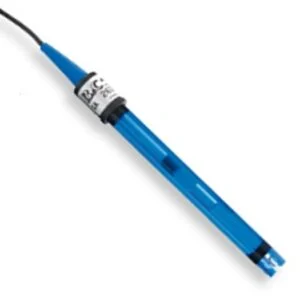
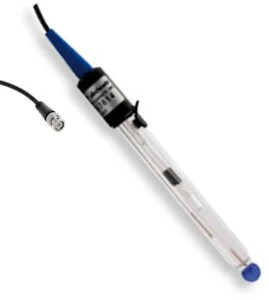
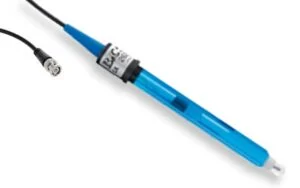
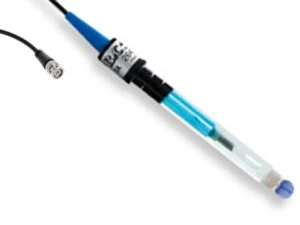
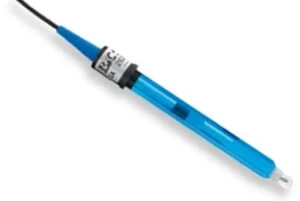
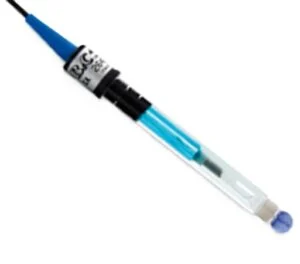
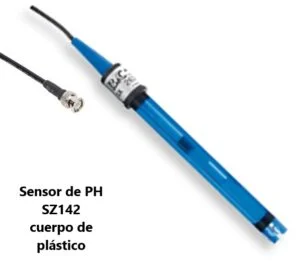
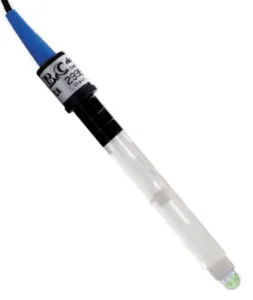
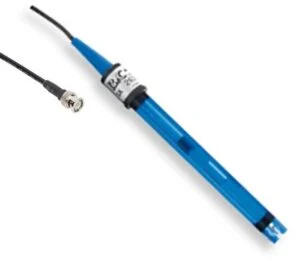
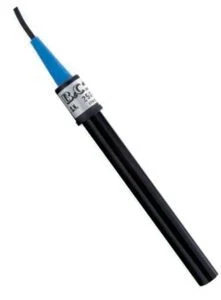
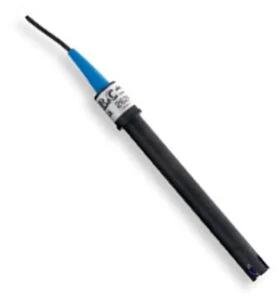
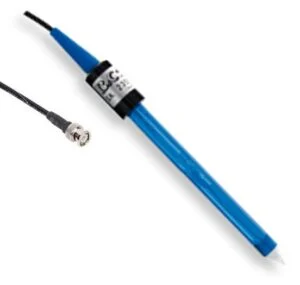
B&C Electronics develops electrodes for the continuous measurement of pH and oxidation-reduction potential (ORP/redox). It offers a variety of glass membranes, reference systems, body materials, and connections to suit different process characteristics.
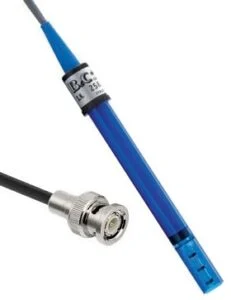
Depending on the model, PVDF bodies, glass or polymeric materials, double junction references, gel electrolyte, coaxial or multipolar connections and integrated temperature probes are used.
The available models include:
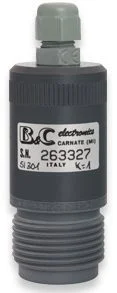
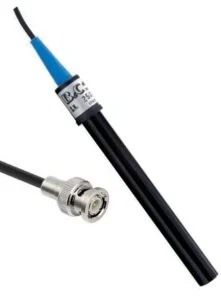
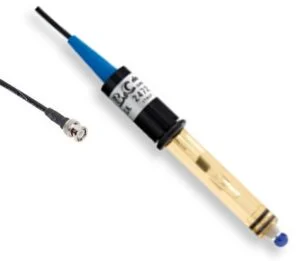
- SZ1140: Combined pH electrode, GX-1 glass, 0–12 pH range, PVDF body, double PTFE junction and coaxial DL connection, without integrated Pt100.
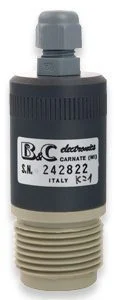
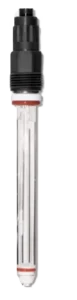
- SZ1150: Combined electrode with GX-V glass, pH range 0–14, PVDF body, double PTFE junction and integrated Pt100.
The selection of the electrode depends on the chemical composition of the liquid, temperature, pressure, pH range, mounting, and compatibility with the analyzer.
Conductive and inductive conductivity sensors
The conductivity range includes conductive contact sensors and inductive toroidal probes.
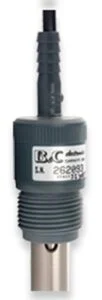
Conductive cells allow the measurement of electrical conductivity using electrodes in contact with the liquid. The cell constant, the materials used, and the operating temperature determine their application.
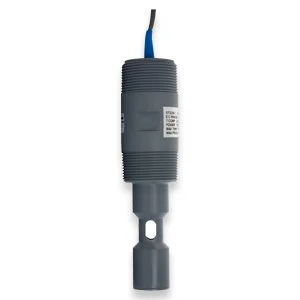
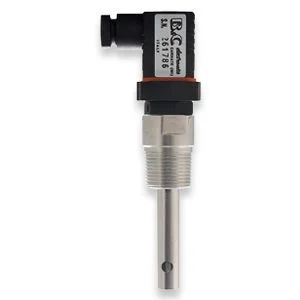
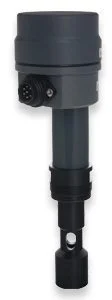
Toroidal sensors employ an electromagnetic induction principle without metal measuring electrodes directly exposed to the fluid. This technology is particularly useful for certain industrial liquids with high conductivity and in processes where scale or deposits hinder the maintenance of conventional cells.
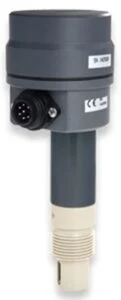
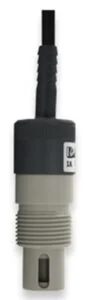
The reference C8825.4 It incorporates inductive measurement, 4–20 mA output, RS485 Modbus RTU communication and temperature compensation using Pt100.
Optical sensors for turbidity and suspended solids
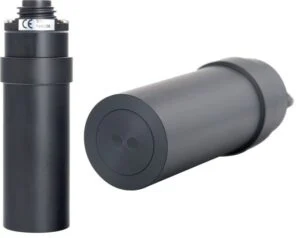
B&C Electronics offers optical turbidity sensors for filtration control, water treatment, tanks, channels and industrial processes.
Certain models employ infrared nephelometric technology in accordance with the ISO 7027 measurement principle, with detection of light scattered by particles present in the liquid.
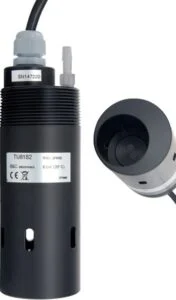
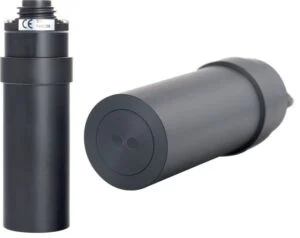
The range includes models for in-line installation, such as the TU8525, and submersible sensors such as the TU8325, which incorporates self-cleaning using compressed air.
Dissolved oxygen measurement
The range comprises dissolved oxygen sensors based on optical and electrochemical technologies, for water treatment and process monitoring applications.
The choice depends on the measurement principle, the expected concentration, the installation, the water conditions, and the calibration and maintenance requirements.
Residual chlorine and disinfection control
B&C Electronics develops analyzers and sensors related to the measurement of free residual chlorine, combined chlorine and total chlorine, as well as other variables used in disinfection processes.
Their offering includes specific solutions for certain compounds and applications, using analytical technologies such as amperometric measurement. The technology and type of chlorine measured must be verified for each product.
Multiparameter probes
Multiparameter probes allow combining different measurements in the same installation.
The family SA8x6x It includes configurations with sensors for level, conductivity, temperature, pH, redox, and dissolved oxygen, with optional turbidity depending on the version. Equipment with data logging and RS485 Modbus communication is available.
Integration with PLC, SCADA, 4–20 mA outputs and RS485 Modbus RTU
Analytical instrumentation for industrial automation
A significant part of the B&C Electronics range is geared towards integrating water quality measurements into industrial control and monitoring systems.
According to the reference, the sensors and transmitters have the following capabilities:
- 4–20 mA analog output: connection to analog inputs of PLCs, recorders, indicators and control systems.
- RS485: serial communication for transmission of measurements and parameters.
- Modbus RTU: Digital reading of values and functions available on compatible equipment.
- Temperature compensation: using integrated or external temperature sensors, depending on the instrument.
- Calibration and configuration: local functions or through digital communication in certain models.
Examples of equipment for industrial integration
The toroidal conductivity probe C8825.4 It allows transmitting conductivity via 4–20 mA or RS485 Modbus RTU.
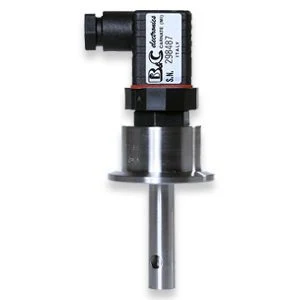
The turbidity sensor TU8525 It incorporates an isolated 4–20 mA analog output and RS485 Modbus RTU digital communication.
The pH transmitter PH3630 It accepts pH electrodes and temperature compensation via Pt100, providing an isolated 4–20 mA output for connection to a control system.
Equipment with RS485 Modbus can be integrated with compatible PLCs, including Siemens controllers and other manufacturers, provided that communication, registers, power supply and configuration parameters are checked.
Important: Not all electrodes and probes have direct 4–20 mA or Modbus output. Some sensors provide a passive electrochemical signal and require a compatible transmitter or analyzer.
Featured B&C Electronics models: references and technical specifications
These references show some of B&C Electronics' solutions for industrial water quality measurement.
| Model | Main features | Application |
|---|---|---|
| SZ1140 | pH 0–12, GX-1 glass, PVDF body, PTFE double junction, 0–100 °C, up to 10 bar, DL connection. Without Pt100. | Industrial pH measurement. |
| SZ1150 | pH 0–14, GX-V glass, PVDF body, PTFE double junction, integrated Pt100 and multipolar DL connection. | Industrial pH with temperature compensation. |
| C8825.4 | Inductive toroidal conductivity, 4–20 mA output, RS485 Modbus RTU and Pt100 compensation. | Industrial conductivity measurement. |
| TU8525 | Optical turbidity ISO 7027, ranges 0–4, 0–40 and 0–400 NTU, 4–20 mA and RS485 Modbus RTU. | Online turbidity and filtration control. |
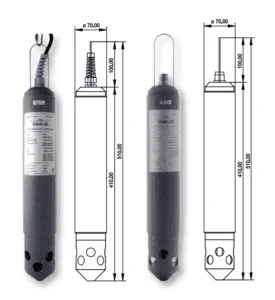
| TU8325 | Submersible turbidity sensor, 4–20 mA, RS485 Modbus RTU and self-cleaning by compressed air. | Reservoirs, canals and water treatment. |
| PH3630 | pH transmitter, LCD display, 3-wire Pt100 input, isolated 4–20 mA output and DIN rail mounting. | pH transmission to PLC and control systems. |
| SA8x6x | Multiparameter probes with different measurement combinations and versions with RS485 Modbus. | Multiparametric water monitoring. |
The characteristics indicated correspond to the configurations described. The selection must be confirmed with the current technical documentation and installation requirements.
How to select a B&C Electronics water quality sensor
The selection of analytical instrumentation depends on the actual process conditions and the desired outcome.
- Parameter: pH, ORP, conductivity, resistivity, turbidity, chlorine, dissolved oxygen or other magnitude.
- Liquid characteristics: drinking water, wastewater, process water, effluents, chemicals or liquids with solids.
- Measuring range: working range, required accuracy, resolution and stability.
- Temperature and pressure: normal conditions, maximum conditions and possible variations during the process.
- Materials: chemical compatibility of the sensor body, electrodes, membranes, gaskets and accessories.
- Mounting type: pipe, flow cell, tank, channel or submerged installation.
- Maintenance: sensor cleaning, calibration, consumable replacement, and self-cleaning requirements.
- Signal and integration: passive signal, 4–20 mA, RS485 Modbus, power supply and compatibility with PLC or SCADA.
When should you choose a conductive sensor or a toroidal sensor?
Conductive cells are suitable for specific conductivity ranges, depending on the cell constant and electrode design. Inductive toroidal probes may be preferable for high-conductivity liquids and certain media where deposits hinder conventional measurement.
When to select online or submersible turbidity?
An inline installation allows the sensor to be integrated into a process circuit or a suitable cell. A submersible probe allows measurements to be taken directly in tanks, channels, or ponds. The presence of dirt and solids may make a version with automatic cleaning advisable.
When should you use a pH sensor with integrated Pt100?
A Pt100 sensor allows temperature to be measured at the same point as pH, enabling compensation when supported by the analyzer. If the electrode does not integrate temperature measurement, another compatible probe can be used depending on the installation.
Industrial applications: ETAP, WWTP, filtration and process control
Drinking water treatment plants (DWTPs)
Monitoring of pH, turbidity, conductivity and disinfection parameters at different stages of drinking water treatment.
Wastewater treatment plants (WWTPs)
Measurement of physical-chemical parameters in tanks, channels and process lines, using sensors suitable for the conditions of the installation.
Industrial effluent treatment
Control of pH, redox and conductivity in neutralization processes, chemical conditioning and wastewater treatment.
Filtration and turbidity control
Monitoring turbidity before and after certain filtration and treatment stages, using optical sensors of the appropriate range.
Chemical processes
Continuous measurement of pH, ORP and conductivity in process liquids, taking into account chemical compatibility, temperature, pressure and assembly characteristics.
Machinery manufacturers and integrators
Integration of probes and transmitters into water treatment equipment, electrical panels, automated systems, recorders and industrial monitoring platforms.
Multiparameter monitoring
Recording and monitoring of various water quality parameters using multiparameter probes and compatible communication systems.
Italian manufacturing, engineering and track record of B&C Electronics
More than 50 years specializing in analytical instrumentation
B&C Electronics was founded in Italy in 1974 and has developed its industrial activity in the field of instrumentation for liquid measurement and process control.
Their technologies encompass electrochemical electrodes, measurement electronics, optical sensors, signal transmitters, analyzers, and controllers.
The manufacturer's experience in water treatment applications and industrial processes allows for different measurement solutions to be available for different installation conditions and maintenance needs.
Engineering and technological development
B&C Electronics' offering combines expertise in electrochemistry, optics, and industrial electronics to develop instruments that can be used independently or integrated into automation systems.
Their specialization includes pH and ORP measurement systems, conductive cells, inductive sensors, turbidity analyzers, disinfection equipment, transmitters, and multiparameter systems.
Quality and business track record
According to corporate information published by the manufacturer, B&C Electronics obtained ISO 9001 certification from CISQ–IQNET in 1998. The validity of any certification applicable to a specific supply should be verified using the updated certificate.
The company is headquartered in Carnate (Monza and Brianza), Italy.
Manufacturer information: B&C Electronics – Official website.
Frequently Asked Questions about B&C Electronics Sensors and Analyzers
Is B&C Electronics a sensor manufacturer?
Yes. B&C Electronics is an Italian manufacturer dedicated to the design and manufacture of sensors, transmitters and analyzers for liquid measurement and industrial processes since 1974.
What parameters can B&C Electronics measure?
Their range includes solutions for pH, ORP, conductivity, resistivity, turbidity, suspended solids, dissolved oxygen, residual chlorine and other parameters related to water analysis.
Which B&C Electronics sensor allows measuring ISO 7027 turbidity with Modbus?
He TU8525 It is an online turbidity measurement sensor using ISO 7027 optical technology, with 4–20 mA output and RS485 Modbus RTU communication.
For certain submerged installations, the following can be studied: TU8325, equipped with self-cleaning using compressed air.
Does B&C Electronics offer toroidal conductivity with 4–20 mA?
Yes. The inductive probe C8825.4 It incorporates 4–20 mA output, RS485 Modbus RTU communication and temperature compensation via Pt100.
What is the difference between SZ1140 and SZ1150 electrodes?
The SZ1140 uses GX-1 glass, measures pH from 0 to 12, and does not include a Pt100 sensor. The SZ1150 uses GX-V glass, measures pH from 0 to 14, and includes a Pt100 sensor. They also use different connections and cables.
Can B&C Electronics sensors be connected to a Siemens PLC?
Yes, certain devices have 4–20 mA or RS485 Modbus RTU outputs, allowing integration with compatible PLCs. Passive electrodes may require an intermediate transmitter. The specifications of each model should be checked.
Does B&C Electronics manufacture multiparameter probes?
Yes. The SA8x6x family includes configurations for measuring various water parameters, including pH, ORP, conductivity, temperature, dissolved oxygen, and level, with optional turbidity measurement. Versions with RS485 Modbus are also available.
Which B&C Electronics pH sensor incorporates temperature compensation?
The model SZ1150 It incorporates a Pt100 sensor that allows the liquid temperature to be measured using a compatible analyzer.
Where can I find B&C Electronics sensors and analyzers in Spain and Portugal?
GUEMISA B&C Electronics supplies instrumentation and offers technical advice to identify suitable sensors, transmitters, analyzers and accessories for various industrial applications in Spain and Portugal.
Technical note: The performance, interfaces, and characteristics of sensors and analyzers depend on the model and configuration. Before installing any equipment, the process conditions and the manufacturer's current technical documentation must be verified.
Use cases
B&C Electronics Products