
Technical guide · GUEMISA
For an outdoor position sensor, the usual starting point is IP65 (dust and water jet resistance), and this is increased to IP67 if it may be occasionally submerged or splashed. If the machine is cleaned with hot water at high pressure, you should look for a sensor that explicitly states IP69K or IP6K9K in its specifications, because IP67 does not guarantee this test. Furthermore, the IP rating is for the entire assembly consisting of the sensor, connector or cable, and counter-connector, and its value is determined by the strength of its weakest link.
What do the two digits in the IP code mean?
The IP code is defined in the standard EN 60529 (IEC 60529). The first digit indicates protection against solid objects and dust, from 0 to 6. The second indicates protection against water, from 0 to 9. An untested digit is replaced by X (IPX7).
| Figure | First figure: solids and dust | Second digit: water |
|---|---|---|
| 4 | Objects larger than 1 mm | Splashes from any direction |
| 5 | Dustproof: Some dust may get in, but not in quantities that will impair performance | Low pressure water jets (6.3 mm nozzle) |
| 6 | Dustproof | Powerful jets (12.5 mm nozzle) |
| 7 | No value (the scale reaches 6) | Temporary immersion: in the standardized test, up to 1 m for 30 min |
| 8 | Worthless | Continuous immersion under conditions agreed upon by the manufacturer, which are more demanding than those specified in figure 7 |
| 9 | Worthless | High pressure and high temperature jets (see IP69K below) |
Two clarifications:
- The ratings are not cumulative. An IP67 rating is tested for immersion, not necessarily against water jets. That's why the specifications list the ratings separately, for example, «IP67 / IP69K».
- IP68 does not have a single test: depth and duration are set by the manufacturer.
For road vehicle equipment, the ISO 20653 standard applies, which adds the letter K to the second digit (IPX6K, IPX9K) and is written, for example, IP6K9K. The IP69K test is based on the DIN 40050-9 standard and uses water jets at approximately 80 °C and 80–100 bar. The data sheets cite the standard for each product: DIN EN 60529 for most and ISO 20653 for IPX-7900.
When to ask for each grade
IP54: Indoor dust and splash protection
It is suitable for use inside machinery and where only occasional splashes are possible; not for uncovered outdoor use. Examples of the datasheets: the TEX potentiometric transducer (IP54) and the F7C linear cable transducer (IP54).
IP65: Outdoors under cover or gentle jet cleaning
Dustproof and water-jet protected. This is the minimum reasonable protection against direct rain or hose cleaning without high pressure. Examples: the LWG potentiometric transducer (IP65) and the IP-6000 rotary potentiometer (IP65 with the EEM connector on its plug secured).
IP67: occasional splashing or immersion
For sensors that may remain submerged for a limited time (trenches, tanks, mobile machinery). The TX2 datasheet details the IP67 test conditions: manufacturing state, 1 m water depth, and 0.5 h. Examples: LWX-003 and LWX-004 (IP67, also dynamic, i.e., with the stem in motion) and TX2.
IP68: continuous immersion
Only if the sensor will be submerged permanently or for an extended period; depth and time must be confirmed with the manufacturer. Examples: the TP1 and TH1 magnetostrictive transducers (IP67/IP68) and the TFD-4000 sensor (IP67/IP68/IP69).
IP69K: hot water pressure wash
This rating is suitable for industries with intensive cleaning (food, beverage, pharmaceuticals) and mobile machinery. Examples include the RSX-7900 angle sensor (IP67/IP69K), the RSB-3600 (IP67/IP6K9K), and the IPX-7900 potentiometer, which offers IP6K9K protection with a cable exit.
The IP rating depends on the assembly: sensor, connector, and cable.
The grade shown on the connector corresponds to the specified configuration. If the connector or cable is of a lower grade, or if the connector is not properly closed, the assembly will be downgraded. Real-world examples of connectors:
- LWH: IP55 with connector mounted only.
- TLH: IP40, or IP54 with the actuator facing down, i.e., depending on the mounting position.
- TX2: IP67, and the data sheet indicates to use a connector with IP67 or higher.
- F200: IP67 with the EEM connector on its plug; the protection is determined by the connector.
- IPX-7900: IP67 with M12 connector output and IP6K9K with cable output.
The connectors and cables in the range also have their own grade. M8 connectors They are IP67 (DIN EN 60529, locked, i.e., fully closed), the M12 They are IP67 rated and of the M16 There are IP40, IP67, and IP68 ratings. An IP67 sensor with an IP40 M16 connector is not an IP67 assembly.
Practical criteria for the set:
- Close the connector completely and with its gasket in place.
- Ensure the cable diameter matches the range of the connector or cable gland, or the seal will not work.
- Leave a loop in the cable before reaching the sensor, so that the water drips off and does not continue along the cable to the entrance.
Condensation: what the IP code doesn't cover
The IP rating measures water ingress from the outside. It doesn't account for internal moisture buildup. When a sealed sensor heats up and cools down, the air inside expands and contracts, and this pressure difference can draw moisture in through seals and cables. This is important in outdoor environments, cold storage rooms, and situations involving hot water washes followed by cooling.
- Choose sensors designed for this purpose: the LWX-003 has a metal housing with differential pressure compensation.
- Respect the operating temperature range of the data sheet: in GUEMISA potentiometers it ranges, depending on the series, from -40 to +100 °C.
- With continuous condensation, consider a sealed non-contact sensor (magnetic or inductive) and install the signal conditioner in a dry enclosure.
The IP rating also says nothing about chemical resistance, UV radiation, or salt spray; for harsh detergents or marine environments, the materials must be checked. IPX-7900, for example, specifies an anodized aluminum housing resistant to salt spray.
GUEMISA product table by IP grade
| IP Degree | Product | Guy | Condition indicated on the form |
|---|---|---|---|
| IP40 / IP54 | TLH | Stemless potentiometric linear transducer | IP54 with the actuator facing down |
| IP54 | TEX | Potentiometric linear transducer with stem | DIN EN 60529; M8 cable or connector |
| IP55 | LWH | Potentiometric linear transducer with stem | With the connector mounted |
| IP65 | LWG | Potentiometric linear transducer with ball joints | M12 connector or cable |
| IP66 | MUK-350 | Signal conditioner in aluminum case | Cast aluminum case |
| IP67 | LWX-003, LWX-004 | Potentiometric linear transducer | Also dynamic |
| IP67 | TX2 | Ø 16 mm potentiometric linear transducer | IP67 or higher connector; tested at 1 m, 0.5 h |
| IP67 / IP68 | TP1, TH1 | Magnetostrictive transducer | According to the specifications of each version |
| IP67 / IP6K9K | IPX-7900 | Rotary potentiometer | IP67 with M12 connector; IP6K9K with cable (ISO 20653) |
| IP67 / IP68 / IP69 | TFD-4000 | Short-stroke, contactless Hall transducer | DIN EN 60529 |
| IP67 / IP69K | RSX-7900 | Magnetic angle sensor | According to the specifications of each version |
How to choose according to the environment
| Around | Starting degree | What else to check |
|---|---|---|
| Outdoors under cover, occasional rain | IP65 | Closed connector and cable of the correct diameter |
| Ditches, basins, risk of flooding | IP67 | Connector with the same grade |
| Hot water high-pressure cleaning | IP69K / IP6K9K | Suitable connector or cable, materials and detergents |
Which GUEMISA products are a good fit?
 LWGPotentiometric stem with ball joints, stroke 50…750 mm, IP65, M12 connector or cable.View technical specifications →
 LWX-003Potentiometric with ball joints, stroke 50…750 mm, IP67 also dynamic, with differential pressure compensation.View technical specifications →
 LWX-004of the same range, with protected stem, stroke 50…750 mm, IP67.View technical specifications →
 TX2potentiometric of Ø 16 mm, stroke 25…300 mm, IP67 with M8 connector or cable.View technical specifications →
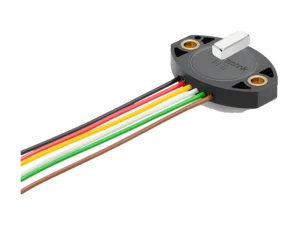 TFD-4000Short-stroke contactless Hall sensor (0…8 to 0…24 mm), ratiometric output 0.25…4.75 V, IP67 / IP68 / IP69.View technical specifications →
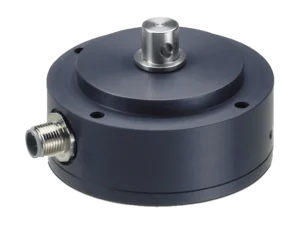 IPX-7900Heavy duty rotary potentiometer, IP67 with M12 connector and IP6K9K with cable.View technical specifications →
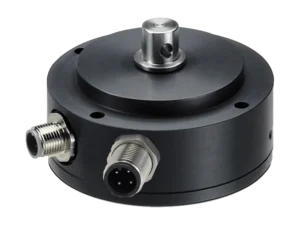 RSX-7900 analogcontactless magnetic angle sensor, 4…20 mA, IP67 / IP69K.View technical specifications →
More sensors in the category linear transducers and connectors in Novotechnik accessories.
Documentation and related cases
- How to specify a measuring instrument (PDF)
- Novotechnik sensors for valves and actuators (PDF, English)
- All technical information about GUEMISA
Frequently Asked Questions
What is the difference between IP67 and IP68?
IP67 is temporary immersion, up to 1 meter for 30 minutes in the standardized test. IP68 is continuous immersion under conditions specified by the manufacturer, which are more demanding than those of IP67, so you should check the depth and time specifications in their documentation.
Can an IP67 sensor withstand pressure washing?
Not necessarily. IP67 is tested under immersion conditions and does not include high-pressure, high-temperature jets. For that, it must be rated IP69K or IP6K9K.
Is the IP rating of the sensor valid if the connector has a lower rating?
No. The assembly adopts the lowest grade between sensor, connector and cable, and requires the closed connector.
Why does moisture get into an IP67 sensor?
Because the IP rating covers water entering from outside, not condensation. Temperature changes create pressure differences that can introduce moisture through seals and cables, so it's advisable to choose enclosures with pressure compensation and respect the temperature range.
Send us the application, race or reference you have and we will tell you the model and your order code.