NCTE in Spain: official distributor
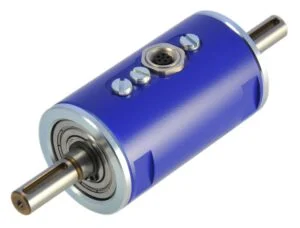
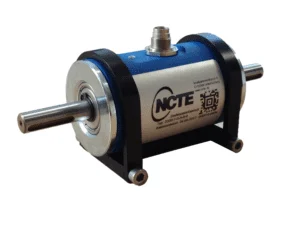
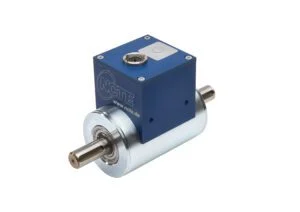
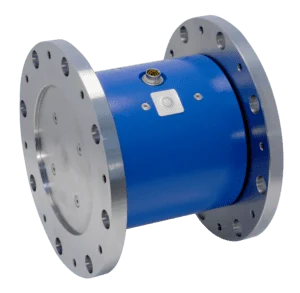
GUEMISA is an official NCTE distributor in Spain. Here are the NCTE products we supply, along with their technical data sheets and documentation. To select the exact part number or request a quote: ventas@guemisa.com · 91 764 21 00.

NCTE AG: German manufacturer of contactless magnetostrictive torque sensors
NCTE AG It is a German manufacturer founded in 2003 and specializing in the Design and manufacture of torque sensors, rotary transducers and non-contact measurement solutions. It develops and manufactures its systems in Oberhaching, near Munich, using its own technology based on the reverse magnetostrictive effect to measure the torsion of mechanical shafts.
NCTE technology allows for the measurement of static and dynamic torque in various applications without relying on strain gauges attached to the shaft or conventional rotary telemetry systems to transfer the measured deformation. Its catalog includes Standard industrial sensors, integrated OEM solutions, instrumentation for agricultural machinery, and pedal sensors for electric bicycles.
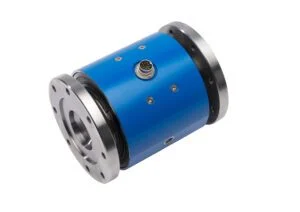
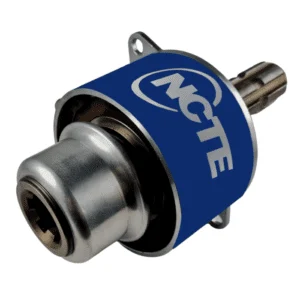
GUEMISA distributes NCTE sensors in Spain and Portugal and advises on series selection, torque range, maximum rpm, accuracy, output interfaces, and mechanical and electrical integration into machinery, production lines, and test benches.
NCTE Torque Sensor Range, Technologies and Applications
Reverse magnetostrictive technology: how NCTE measures non-contact torque
The axis as the primary element of measurement
NCTE uses the reverse magnetostrictive effectThe torque applied to a coded ferromagnetic component modifies the characteristics of its magnetic field. A readout electronic detects these variations and calculates the torque. In integrated solutions, the shaft itself can act as the sensing element, without incorporating strain gauges on it.
Advantages of contactless measurement
The reading process does not require electrical contact with the shaft. This reduces the number of wear-prone components and simplifies certain integrations into transmissions and machines. The absence of contact between the reading and the shaft does not mean the mechanical assembly is free of bearings, loads, or environmental limitations; these depend on the specific model.
Magnetostriction versus strain gauges and telemetry
Conventional strain gauge transducers detect body deformation using strain gauges; rotary versions require power and signal transfer from the rotating element. NCTE uses magnetic encoding and contactless reading. There is no universally superior technology: Precision, integration cost, torque, rpm, electromagnetic environment, and maintenance are compared.
More information: NCTE official technical explanation.
Integration with PLC, industrial control and 0–10 V, 4–20 mA, CAN and USB signals
Available signals depending on the series
Analog outputs are included in various NCTE series 0–10 V, 4–20 mA and variants with CAN bus or USB. The choice of interface depends on the family, the specific reference and the configured option; not all outputs are available on all models.
Installation on PLC, SCADA and acquisition equipment
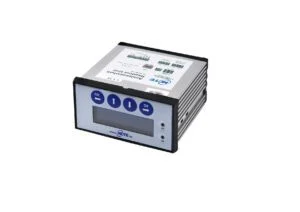
Analog outputs can be connected to compatible inputs of a PLC or data logger; for CAN, a compatible interface, protocol, and message documentation are required. USB solutions allow for certain acquisitions and diagnostics using the manufacturer's tools. Power supply, scaling, isolation, update frequency, and filtering must be verified.
Torque and speed to measure power
When rpm is also available, mechanical power is calculated as P (kW) = M (Nm) × n (rpm) / 9549.3. For dynamic analysis, torque and speed must be synchronized.
OEM integration on an existing axle
In series production projects, magnetostrictive solutions adapted to the mechanical component can be studied. These require evaluation of material, magnetic coding, readout space, external magnetic field, manufacturing process, calibration, and service conditions.
NCTE 2000–7300 Series: Models, Ranges, Speed, and Accuracy
Summary of the NCTE standard series to facilitate pre-selection. The limits correspond to values published by the manufacturer for the families and should be checked against the requested code.
| Series | Nominal torque up to | Maximum family speed | Declared accuracy |
|---|---|---|---|
| 2000 | 500 Nm | 5,000 rpm | < ±1 % |
| 2300 | 100 Nm | 10,000 rpm | < ±0.5 % |
| 3000 | 2,000 Nm | 10,000 rpm | < ±0.2 % |
| 4000 | 1,000 Nm | 10,000 rpm | < ±0.1 % |
| 5000 | 10,000 Nm (more, upon request) | Check version* | < ±0.5 % |
| 7000 | 5,000 Nm | 3,600 rpm | < ±0.5 % |
| 7300 | 3,000 Nm | 1,100 rpm | < ±0.5 % |
* NCTE's general documentation shows different RPM limits for the 5000 series between the overall table and the detailed description. As a precaution, a single speed should not be specified without verifying the current reference with the manufacturer.
Primary source: NCTE's official standard catalog.
How to select an NCTE torque sensor and compare it to other technologies
Data that GUEMISA needs to recommend a series
- Maximum and nominal torque: service range, direction of rotation/load, overloads and starting torque.
- RPM: continuous regime, maximums and transients.
- Precision: tolerance and permissible error in the measurement set.
- Mechanical construction: round or square shaft, free length, couplings, support and parasitic torques.
- Signals and power supply: voltage, current, CAN or USB depending on the chosen code.
- Atmosphere: IP rating, vibration, temperature, humidity and exposure to magnetic fields.
- Production: laboratory use, industrial unit or OEM integration with manufacturing volume.
When is it advisable to consider NCTE versus a strain gauge sensor?
When the application favors non-contact magnetostrictive measurement, shaft integration, or a compact form factor, NCTE can be an alternative to traditional strain gauge and telemetry solutions. If the application requires extremely low metrological uncertainty, specific approvals, or a particular geometry, it is necessary to compare the performance of actual models, not just the underlying physical principle.
Equivalencies with HBK, HBM, Kistler, Magtrol or Lorenz
GUEMISA can evaluate NCTE models against third-party solutions in terms of torque, RPM, accuracy, dimensions, and output. Claims of a "plug and play" replacement should not be made without verifying the original model, interfaces, and mechanical and metrological compatibility.
Applications: agricultural machinery, OEM, automotive and electric bicycles
Power take-offs (PTOs) and agricultural machinery
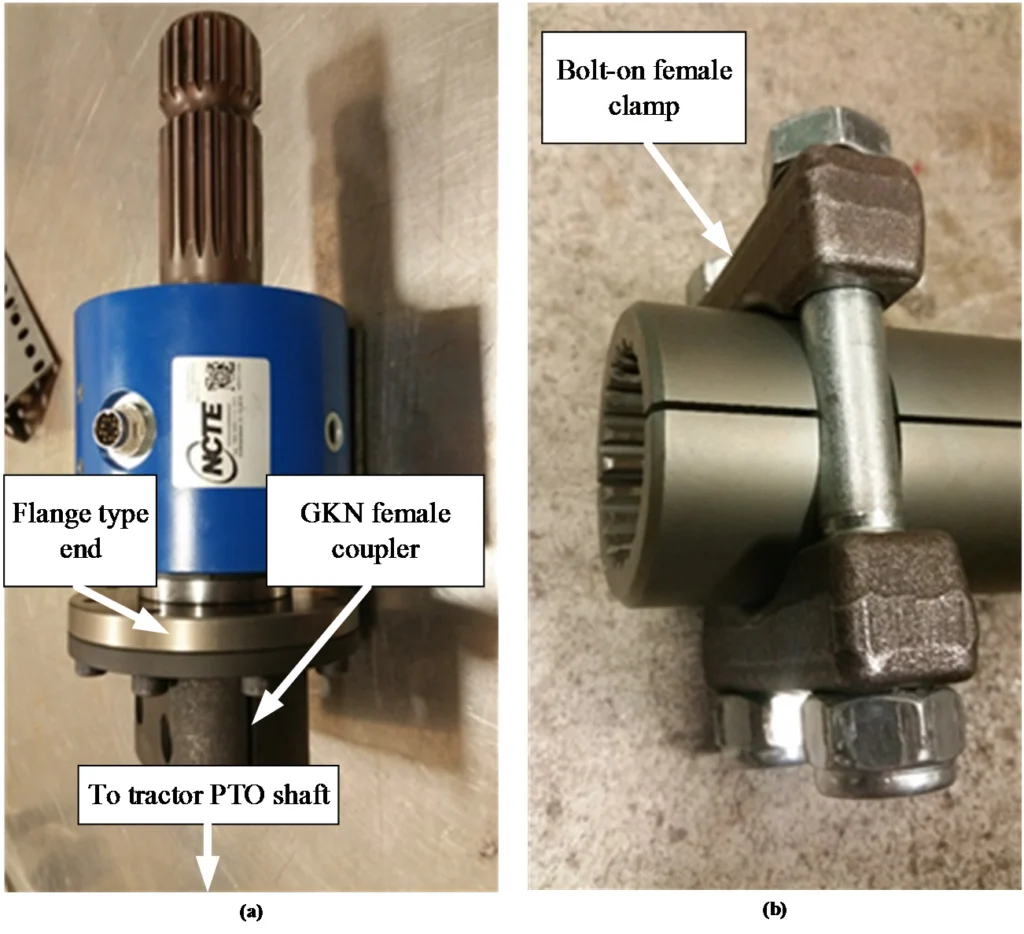
Measurement of torsional stresses in transmissions and drives of tractors and implements, including applications for validation, research and monitoring of the work performed.
Gearboxes, conveyors and industrial machinery
Load testing, drive monitoring and torque control in certain industrial processes.
Test benches and end-of-line
Testing of motors, shafts and transmissions using standard series rotary sensors with ranges and signals adapted to the measuring equipment.
OEM Integration
Development of a torque measurement solution integrated into the mechanical component itself, with prior evaluation of design, materials, coding and manufacturing process.
Electric bicycles and pedal assist
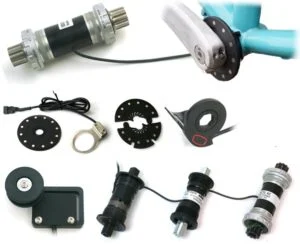
NCTE sensors can measure the cyclist's effort and other pedaling variables. The S-BB-RT bottom bracket incorporates torque measurement; Other models in the family, such as the S-BB-R and S-BB-RP, should not be presented as torque sensors without verifying their configuration. The PAS cadence sensor and a torque sensor are not functionally equivalent.
Check the GUEMISA tab for the S-BB-RT bottom bracket sensor; The URL retains a previous name that should be corrected with a 301 redirect when the record is reviewed.
German manufacturing, magnetostrictive engineering and NCTE R&D
In-house manufacturer and engineer
NCTE AG was founded in October 2003. The company develops and produces sensors in Oberhaching, Germany, It markets both standard series and special OEM integration projects. Its technology is based on the reverse magnetostrictive effect and proprietary magnetic coding processes.
Industrial development and special applications
The manufacturer offers solutions for measuring torque, bending, and shear. When selecting special variants, the shaft material, manufacturing tolerances, calibration, and actual electromagnetic and mechanical influences must be considered.
Quality and documentation
NCTE publishes information on its standard families, manuals, technical data sheets, and 3D models for certain references. The existence of a calibration certificate or a manufacturer's quality system is also required. does not automatically imply an ISO/IEC 17025 accredited calibration for each product; That requirement must be expressly requested.
Institutional information: NCTE AG – Company and Manufacturing.
Frequently Asked Questions about NCTE Torque Sensors
Is NCTE a sensor manufacturer or distributor?
NCTE AG is a German manufacturer that designs and produces magnetostrictive sensors and measuring systems. GUEMISA is a company that distributes its solutions and provides technical and sales support in Spain and Portugal.
How does an NCTE contactless torque sensor work?
The reverse magnetostrictive effect modifies the magnetic field of the encoded shaft when it receives a torsional force. A readout electronics unit measures these variations and calculates the torque.
Does NCTE use strain gauges?
Its magnetostrictive technology differs from conventional measurement using strain gauges attached to the shaft. The specific principle and electronics must be consulted for each product.
Which NCTE series has the highest standard accuracy?
Within the standard families compared, the 4000 series declares an accuracy of less than ±0.1 % for the conditions specified by the manufacturer.
Which NCTE series allows measuring up to 10,000 Nm?
The 5000 series includes nominal configurations up to 10,000 Nm and special variants available upon request. RPM and geometry must be verified for exact specifications.
Can an NCTE sensor be connected to a Siemens PLC?
Yes, provided that the chosen configuration provides a signal compatible with the available inputs, such as an analog output or a digital interface, using appropriate hardware and protocol.
Does NCTE offer sensors for tractors and power take-offs?
Yes. The 7000 series and NCTE's special solutions can be used in agricultural and power transmission applications after review of the environment and mounting.
What is the difference between the NCTE S-BB-RT bottom bracket and a PAS?
The S-BB-RT incorporates torque measurement in the bottom bracket; a conventional PAS usually detects cadence or passage of magnets and does not necessarily quantify the effort applied to the pedal.
Can NCTE be an alternative to HBK or Kistler?
For certain applications, yes. The comparison should be made by reference and requirements for torque, rpm, precision, interfaces, space and environment, without presupposing direct equivalence.
Where can I buy NCTE sensors with technical advice?
GUEMISA supplies NCTE sensors to industrial customers in Spain and Portugal and advises on the selection of models, signals and special solutions.
NCTE torque sensor distributor in Spain and Portugal: GUEMISA
GUEMISA SL Sensors and Instrumentation. We assist engineering firms, OEMs, maintenance departments, industrial companies, and laboratories in selecting NCTE torque sensors. We can review load and speed requirements, study shaft integration, and consult with the manufacturer on output and mounting options.
To request a technical quote, please specify nominal and maximum torque, RPM, application, shaft geometry, accuracy, IP rating, and output type. Contact: ventas@guemisa.com · +34 91 764 21 00. Below you will find the references published in our catalog.
Technical note: Specifications depend on the model and its configuration. The manufacturer's current specifications take precedence. Comparisons with other brands are for guidance only and do not constitute official equivalencies.
Use cases
NCTE Torque Sensor Products