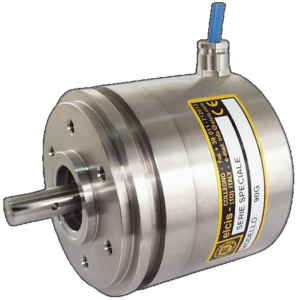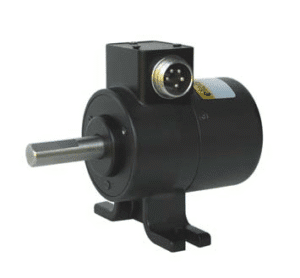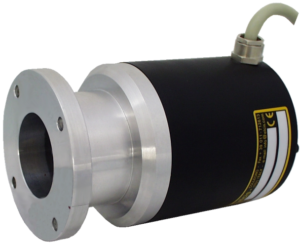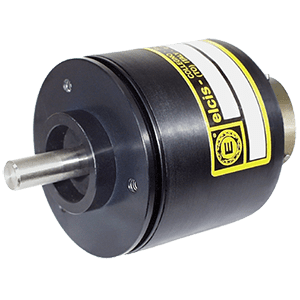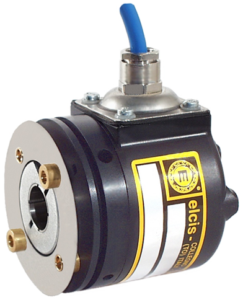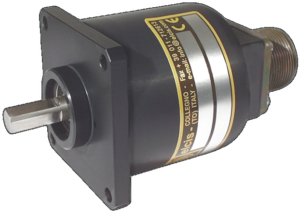





















Single-turn Absolute Encoder A/359C
- Category: Encoder, Absolute Encoder, Single-turn Absolute Encoder, SENSORS
In demanding industrial environments, the need to know the exact shaft position without performing a prior homing cycle is critical for operational efficiency. The A/359C Single-Turn Absolute Encoder eliminates dependence on external reference signals, guaranteeing immediate system status after a shutdown or power failure.
Internal optical technology allows encoding up to 13 bits per revolution, offering a maximum resolution of 8192 pulses. The standard parallel output interface facilitates direct integration into control systems without the need for additional converters, adapting to high-speed and angular accuracy requirements.
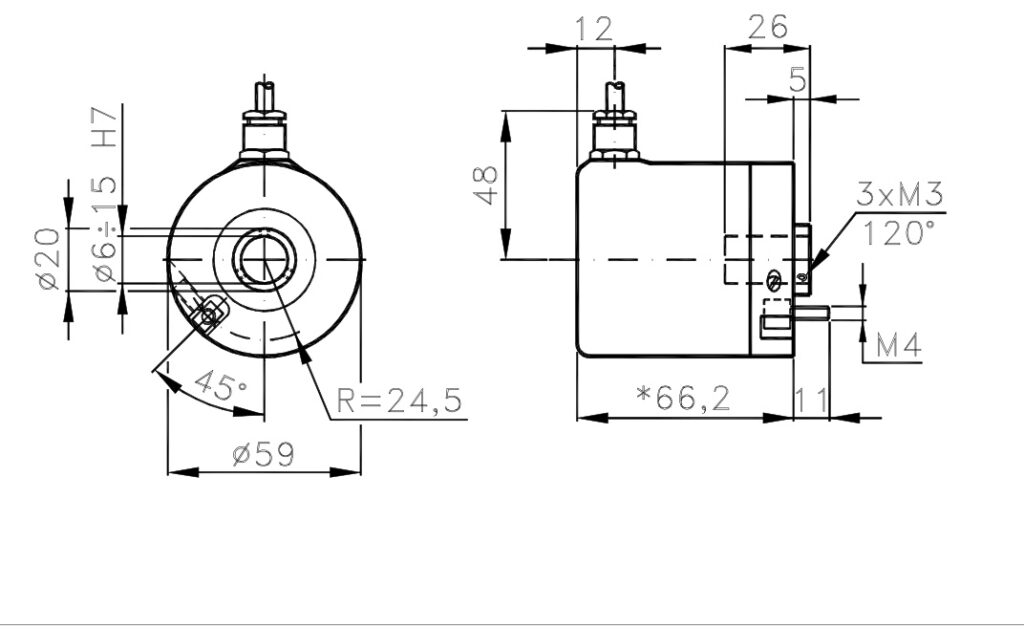
Constructed with an anodized aluminum base and a hollow stainless steel shaft, the device withstands radial/axial loads of 4 kg and vibrations of 50 kilocycles. Its casing protects the internal components from dust and impacts, maintaining signal integrity under adverse conditions. Available in guemisa.es.
- It stores the instantaneous angular position without the need for mechanical homing after power outages.
- Hollow stainless steel shaft compatible with standard internal and external couplings.
- It supports operating temperatures of 0 – +70 °C in standardized configurations.
- IP65 protection on the outlet side to withstand contaminated industrial environments.
Technical Frequently Asked Questions
What alignment precautions does the A/359C axle require?
The hollow stainless steel shaft supports radial/axial loads of 4 kg and axial loads of 300 g. It is crucial to ensure that the internal coupling does not introduce excessive angular misalignment, as this could compromise the service life of the internal sealed ball bearings.
What connectors and output options are available for the A/359C?
The device supports standard parallel, SSI serial, or analog (current/voltage) outputs. Output stages include 10mA and 70mA open collector NPN outputs with PTC. Custom options such as parity or latching are available upon request, depending on the wiring configuration.
What are the operational and environmental limits of the A/359C?
It operates between -30°C and +85°C with storage up to +125°C. The anodized aluminum housing offers IP65 protection at the output, resisting vibrations of 50 kilocycles and moderate mechanical impacts without degrading the internal optical signal.
How does the A/359C integrate with modern control systems?
The parallel interface transmits data directly to microcontrollers or PLCs. For high-speed applications, the maximum supported frequency reaches 2 kHz. The analog outputs allow direct conversion to current (4-20 mA) or voltage (0-10 V) signals for legacy systems.
Properties
| Feature | Specification |
|---|---|
| Vcc Power Supply | 18–28 V, 5 V ±5%, 15 V ±5%, 8–24 V, 10–30 V |
| Axis | Ø 6 mm / 8 / 10 / 12 / 15 mm |
| Total Weight | 300 g |
| Maximum Radial Load | 4 Kg |
| Axial Load | 4 Kg |
| Maximum Intermittent RPM | 6.000 / 3.000 / 8.000 |
| Starting Torque | 60 / 90 / 25 gcm |
| Electrical Noise | Low (Filter integrated into options) |
| Impact Resistance | 50 G x 11 ms |
| Operating Temperature | 0 – +70 °C |
| Resolution (positions) | 8192 (13 Bits) / BCD Code up to 10 bits |
| Maximum Frequency | 50 kHz |
| IP protection | IP65 (Outlet Side) |
| Vibration Resistance | 12 G (10 – 2000 Hz) |
Other products