




















Dual Range Torque Sensor DF Dual 3 | 3000 Nm | 16,000 RPM
- Manufacturer: CENSORED
- Category: Very high torque (10,000-150,000 Nm), Rotary, Torque sensor
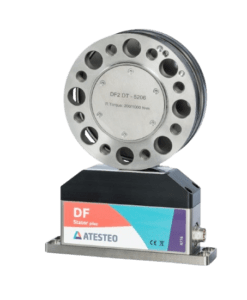
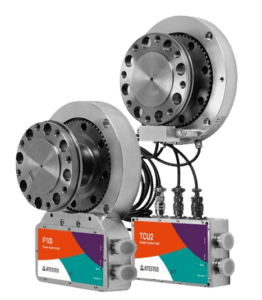
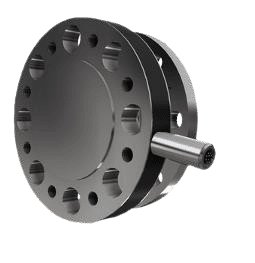
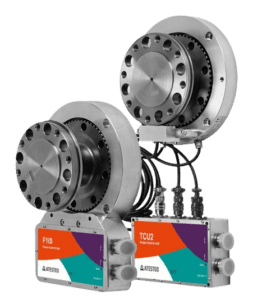
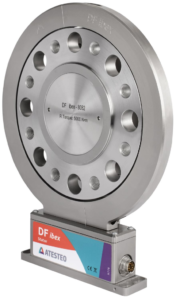
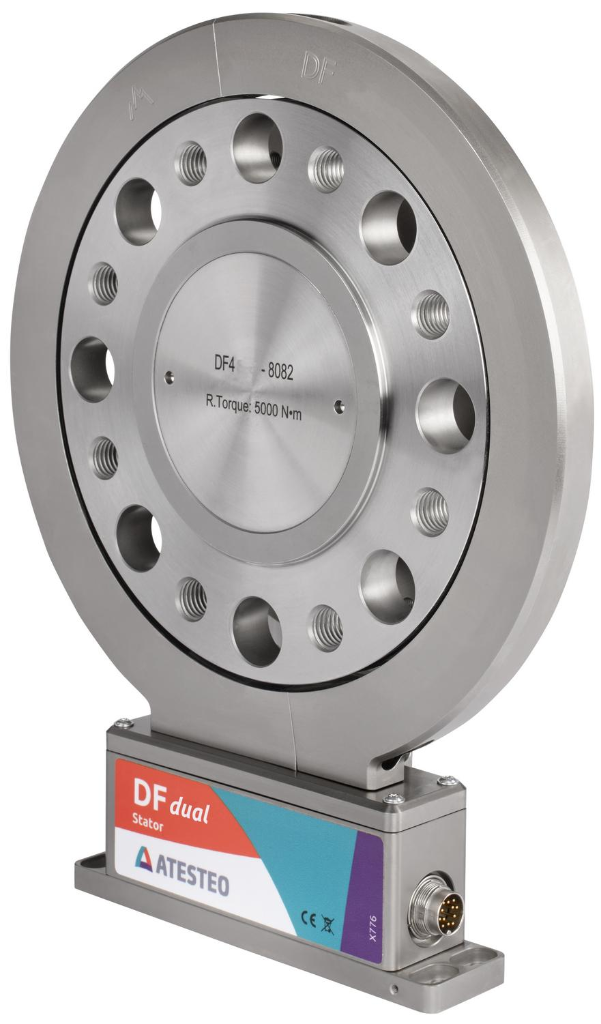
The Atesteo DF Dual 3 torque sensor is an advanced metrology instrument designed to measure torsional variations in test benches and demanding industrial applications. Its innovative architecture, based on a split-ring stator, allows for easy mounting around shafts already integrated into the system, eliminating the need to remove components for installation. Data acquisition and conditioning are performed by the Atesteo TCU5 control unit, which centralizes signal outputs via CAN-Bus connectivity, RS422 frequency, or scalar analog signals, ensuring seamless integration into advanced automation systems.
The DF Dual 3 operates using strain gauges (DMS) and inductive digital transmission, ensuring maximum signal integrity and maintenance-free, wear-free operation. Electromagnetic telemetry enables contactless data and power transfer between the rotor and stator, protecting the signal from electromagnetic interference. This design allows for an accuracy of 0.05% (0.04% optional) and a maximum speed of 16,000 RPM, ensuring simultaneous high- and low-load data capture without requiring any mechanical component changes on the test bench.
Dual Engineering Audit (FAQ)
How does the harmonic expansion of the DF Dual 3 affect it under extreme temperature conditions?
The harmonic expansion of the DF Dual 3 is a phenomenon that must be considered under extreme temperature conditions. The sensor design incorporates materials with controlled coefficients of thermal expansion to minimize variations in the pitch circle diameter (PCD) and maintain measurement accuracy. The radial concentric stator structure ensures that the expansion is distributed evenly, maintaining the sensor's structural and functional integrity. Continuous evaluation of the operating temperature range from 0 °C to +80 °C guarantees that the DF Dual 3 operates without interruption across a wide temperature range.
What is the importance of reactive inertia in the performance of the DF Dual 3?
Reactive inertia is a critical factor in the performance of the DF Dual 3, as it directly affects the sensor's ability to handle rapid accelerations and decelerations. The rotor's inertia of 0.0092 kg·m² is optimized to minimize resistance to motion and maximize the sensor's response to torque variations. This ensures that the DF Dual 3 can operate at maximum speeds of up to 16,000 RPM without compromising measurement accuracy. The sensor's structure, designed with a stepped approach, allows for a balanced mass distribution, reducing reactive inertia and improving energy efficiency.
Properties
| Nominal Pair Range (Mnom) | 3000 Nm |
| Analytical Precision Class | 0.05% |
| Maximum Speed Continuous Acceleration | 16,000 RPM |
| Measurement Principle | Parallel Strain Gauges (DMS) and Inductive Transmission |
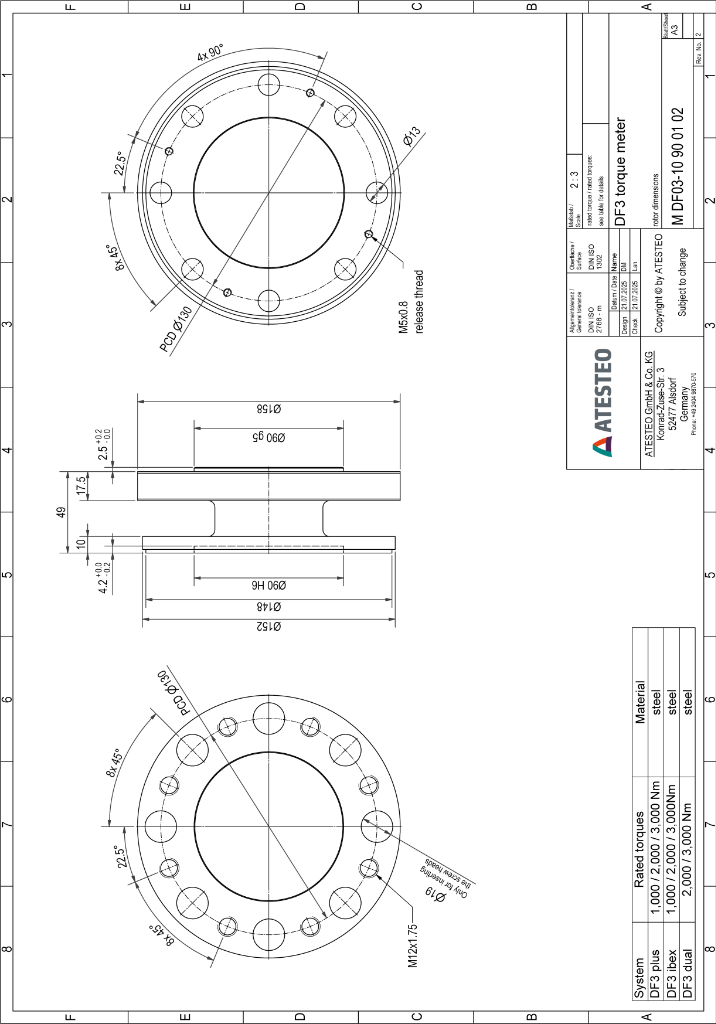
| Primitive Circle Diameter (PCD) | Rigid ISO 130.0 mm fixing |
| Outer Diameter of the Magnetic Rotor | 158 mm |
| Transverse Length Axis | 49 mm |
| Geometric Drag Inertia | 0.0092 kg·m² (Restricted Rotational Mass) |
| Dynamic Structural Weight (Rotor/Stator) | 3.0 kg / 1.04 kg |
| Analytical Telecommunications Outputs | Raw RS422 Frequency, Analog Base, CAN 2B Bus Network |
| Voltage Operating Electrical Power | 24 V DC Parametric |
| Functional Operating Thermal Band | Continuous evaluation from 0 °C to +80 °C in plant |
| Insulating Enclosure Regulations | IEC/NEMA IP54 |
Other products