
Case study · Dimetix
Bridges and pillars
Every structure must be controlled and monitored to ensure its safety, both during construction and throughout its lifespan. In bridges, displacements between piers and bowing are monitored once they are built.
The DPE-10-500 sensors and PROFINET communication module provide reliable readings with an error of ±1 mm. The sensors are integrated into the customer's own telematics management software.
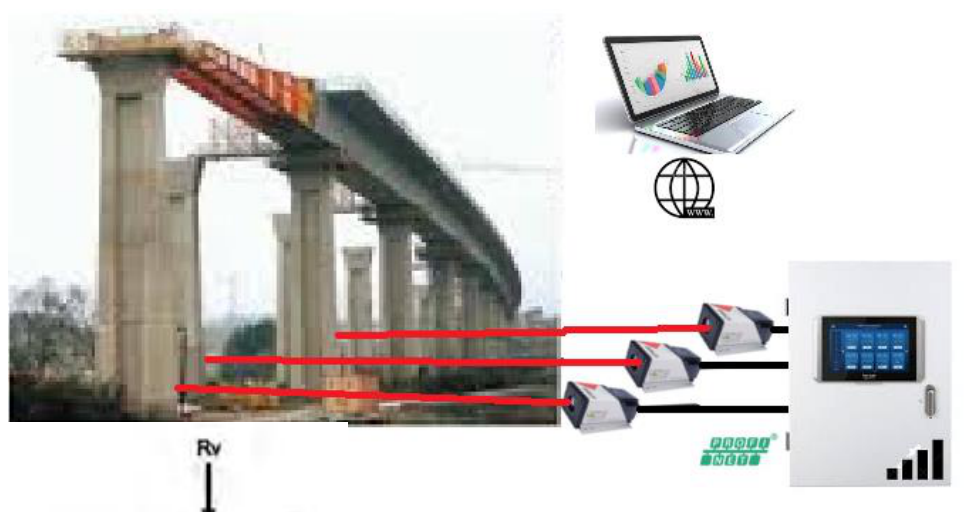
In another case, sensors were installed to monitor the movement of the pillars under a bridge while buildings were being constructed and the bridge had to remain in place. This was done using motion and temperature monitoring.
Tunnels
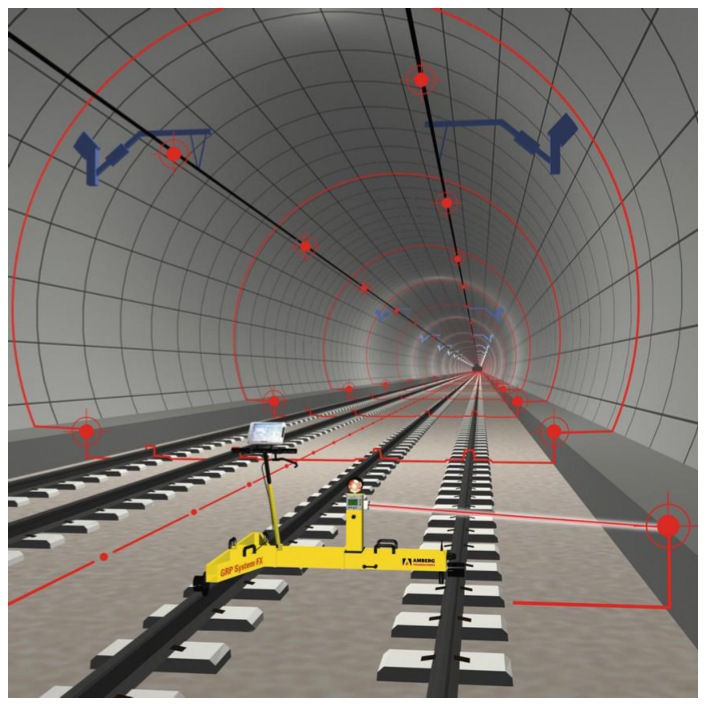
The sensors measure the circumference of the tunnels, analyze their stability, and the influence of external pressure on the tunnel diameter.
They have been installed on tunnel boring machines, mobile triangulation machines, and at fixed points to monitor the circumference and stability over time, or to check the parallelism between the tracks and the tunnel wall. Triangulation provides data on the progress of the construction work.
Slopes and risk zones
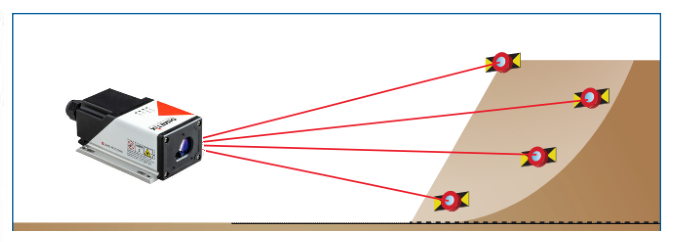
The sensors monitor slopes during construction and in areas at high risk of landslides or avalanches. They have been used to monitor mountains during rainy seasons, volcanoes, slopes or large rocks along roadsides, and to measure snow levels.
With this data, actions can be taken to prevent catastrophes that have a cost to people or infrastructure.
Sensor performance
| Fact | Worth |
|---|---|
| Range over reflective sheeting | Up to 500 m |
| Range on natural surfaces | Up to 100 m |
| Precision | ± 1 mm |
| Repeatability | ± 0.3 mm |
| Operating temperature | -40 to +60 °C |
| Serial interfaces | SSI, RS-422/485, RS-232 and 2 digital outputs |
| Optional interfaces | PROFINET, EtherNET/IP and EtherCAT (Industrial Ethernet) |
| Protection | IP65 |
| Weight | 500g, with aluminum casing |
- Easy installation thanks to the visible laser beam
- Setup with free software
- Maintenance-free operation
Calibration of each sensor
- 100% of the sensors and electronics are calibrated and tested, one by one.
- Thermal drift calibration in a climate cabinet from -40°C to +70°C, with 2,000 readings per sensor.
- Longitudinal calibration on a 40 m mobile calibration bench.
- According to the model, calibration with a fixed point at 500 m.
Frequently Asked Questions
What sensor is used to monitor bridges?
The DPE-10-500 with PROFINET communication module, with an error of ±1 mm.
What is the range of the sensors?
Up to 500 m on reflective sheeting and up to 100 m on natural surfaces.
What is their accuracy and repeatability?
Accuracy ± 1 mm and repeatability ± 0.3 mm.
What interfaces do they include?
Standard features include SSI, RS-422/485, RS-232 and 2 digital outputs; optionally PROFINET, EtherNET/IP and EtherCAT.
What are they used for in tunnels?
To measure the circumference, analyze the stability, and check the parallelism between the tracks and the wall.
How are the sensors calibrated?
100% of the sensors are calibrated: thermal drift between -40 ºC and +70 ºC with 2,000 readings per sensor and longitudinal calibration on a 40 m mobile bench.
Related
- Bridge monitoring with laser sensors
- Structural auscultation and monitoring with Dimetix laser sensors
- DPE-10-500 Laser Distance Sensor
- Dimetix
- Dimetix laser in metallurgy: ingots and furnaces
- All technical information about GUEMISA
Below, the original PDF document is available for viewing or downloading.