
Technical guide · GUEMISA
For a test bench, the load cell is chosen based on the type of stress (compression only, tension and compression, or bending), a nominal capacity that covers the actual peak loads with a margin, and an output in mV/V compatible with the power conditioner. The mounting is just as important as the load itself: the load must be axial, and moments and lateral loads must be kept outside the load cell.
This guide summarizes the common types, how to size the range, what sensitivity and accuracy class mean, what the conditioner does, and what to consider during installation. At the end, it lists compatible GUEMISA products.
Types of load cells and what each one is used for
All the cells in this article are strain gauges: an elastic deformation of the metal body modifies the resistance of the gauges, connected in a Wheatstone bridge, and the bridge delivers a very small tension proportional to the force.
| Guy | Effort that measures | Typical use in test bench | Point to watch |
|---|---|---|---|
| In S (type Z) | Tension and compression | Tensile tests, suspended weighing, force measurement on a tie rod | The two threads must be aligned with the line of force. |
| Button or compression | Compression | Presses, crushing tests, structural supports | The load must be centered, usually with a button or a support ball joint. |
| Tension-compression (column or cylinder) | Tension and compression | Test cylinders, fatigue test benches, bidirectional measurement | It needs ball joints or couplings that prevent moments |
| Flexural beam | Force perpendicular to the beam's axis | Small and medium loads, platforms, hoppers | Sensitive to the point of load application |
| Ring or pancake | Compression, and traction in some models | Confined spaces, strength measurement in bolted joints | It requires flat, parallel support surfaces. |
How to choose between them
- If the force changes direction during the test, a model that allows for both tension and compression is needed.
- If there is only compression and little headroom, a button or a flat model takes up less space.
- If the force cannot be perfectly axial due to the geometry of the bench, a design with ball joints at its ends is advisable.
Measurement range and overload margin
The rated capacity is the force at which the cell delivers its full-scale output. It must be greater than the maximum value the test bench will see, including dynamic peaks, startup shocks, and mounting loads. If the capacity is too low, a spike can permanently deform the cell. If it is too high, resolution is lost because the useful signal is limited to a small fraction of the range.
- The data sheet indicates an allowable overload (without change of characteristics) and a breaking overload. The values depend on the model and the manufacturer: they should not be assumed.
- For loads with shocks or rapid inversions, it is advisable to size with more margin than for static loads.
- If the series allows for multiple capacities with the same geometry, the range can be changed without remaking the tooling.
Sensitivity in mV/V and actual signal
The nominal sensitivity is expressed in mV/V: millivolts of output per volt of excitation, at full scale. The actual signal is the product of both. With a sensitivity of 2 mV/V and an excitation of 10 V, the full scale output is 20 mV. This is a small signal, which is why shielded cabling and signal conditioning are important.
- Cells with the same nominal sensitivity can be replaced without completely redoing the measurement chain, although it is advisable to check the zero and the slope.
- The 4-wire connection is the basic one. The 6-wire connection adds two feedback (sense) wires that compensate for voltage drop in long cables.
- The maximum permissible excitation is shown in the data sheet and must not be exceeded.
Accuracy class
The accuracy of a cell is described by several parameters, not a single number: nonlinearity, hysteresis, repeatability, creep, and thermal drift of zero and sensitivity. These are usually expressed as a percentage of full scale. For a test bench, the most important factor is that the sum of the relevant errors is consistent with the desired level of uncertainty.
- In legal weighing applications, classes are used (for example, those of the OIML R60 standard). A test bench does not normally require this classification, but it does require calibration traceability.
- If the test needs to be documented, a calibration certificate is requested from the cell and it is noted how often it is repeated.
- The complete chain (cell, cable, conditioner, acquisition) has the accuracy of the whole, not that of its most accurate component.
Conditioner or amplifier
The conditioner powers the bridge and converts the millivolts into a standardized signal (0–10 V or 4–20 mA) or a digital reading. It must accept the cell's sensitivity, provide the appropriate excitation, and offer zero and gain adjustment.
| Criterion | What to check |
|---|---|
| Entrance | That covers the range in mV that the cell provides (sensitivity to excitation) |
| Excitement | Available voltage and maximum current to power the bridge |
| Exit | Voltage, current, or digital, depending on the acquisition system |
| Resolution and speed | Converter and measurement rate sufficient for the pace of the trial |
| Functions | Tare, peak, minimum and maximum values, digital filter |
| Food and environment | Supply voltage, front panel or case protection, operating temperature |
Correct assembly: axial loads and no moments
A load cell accurately measures the force component along its measurement axis. Everything else (bending moments, lateral forces, torsion) is a disturbance that can distort the reading or damage the elastic element.
- Align the cell axis with the bench's line of force.
- Use ball joints, double-joint couplings, or support buttons to absorb misalignments.
- Place the cell on flat, rigid, clean surfaces.
- Do not pull on the cable or use it as a mechanical component. Secure it to prevent vibration and keep it away from power cables.
- Protect the cell against accidental overloads with mechanical stops if the bank can exceed them.
- Allow the assembly to reach its operating temperature before zeroing it out.
Torque sensors for test benches
If the test bench measures torque rather than linear force, a torque sensor is used, positioned between the motor and the load. The same criteria apply when selecting a torque sensor: rated torque with margin, accuracy class, maximum rotational speed, output type (voltage, current, or bus), and shaft connection method. Rotary torque sensors transmit the signal non-contact from the rotating shaft, eliminating the need for brushes to wear out.
Which GUEMISA products are a good fit?
 CTCtensile and compressive load cell, with a range of 15 to 5000 kg according to its data sheet.View technical specifications →
 NCTE Series 4000Non-contact rotary torque sensor, 50 to 1000 Nm, 0.1% accuracy, 0…10 V or 4…20 mA output, and CAN-Bus and USB.View technical specifications →
 NCTE Series 2300Low range rotary torque sensor, 0.5 to 100 Nm, accuracy ±0.5%, up to 10,000 rpm, output 0…10 V or 4…20 mA.View technical specifications →
 NCTE Readout UnitTorque indicator with 0…5 V, 0…10 V and 4…20 mA inputs, USB interface and microSD slot.View technical specifications →
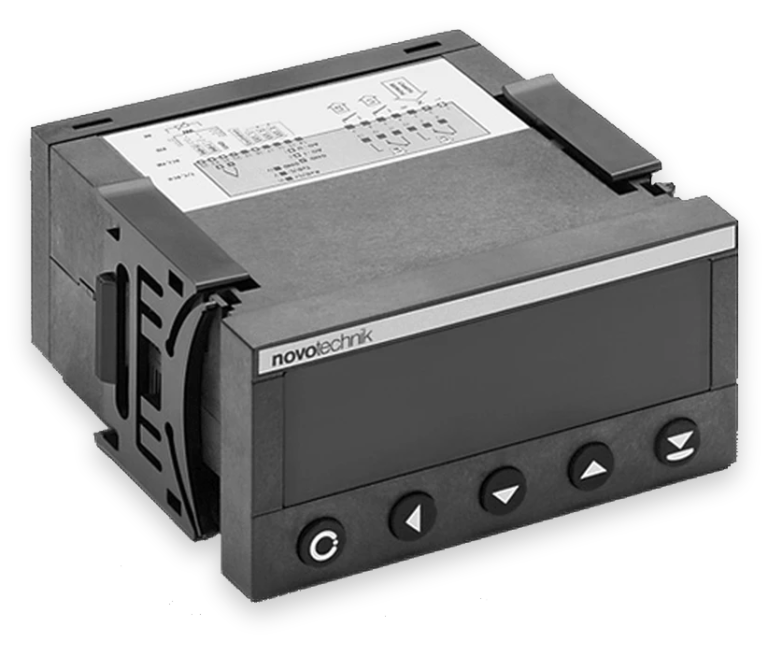 MAP-4000Indicator and conditioner with voltage input of 0…60, 150 or 300 mV, adjustable excitation from 5 to 24 V DC and 24-bit Sigma-Delta converter.View technical specifications →
The load cell category on the website currently contains only a few models. If you require a different capacity or geometry, please provide us with the bank details and we will discuss it with you.
Documentation and related cases
- Load cells and strain gauges: tutorial (PDF)
- Torque measurement on engine test benches (PDF)
- All technical information about GUEMISA
Frequently Asked Questions
What load cell capacity do I need for a test bench?
A capacity exceeding the actual maximum force, including dynamic peaks, with a margin above the datasheet's allowable overload. Also avoid excessive capacity, as this reduces useful resolution.
What does 2 mV/V mean?
The cell delivers 2 mV for every volt of full-scale excitation. With 10 V of excitation, the full-scale output is 20 mV.
Which cell is useful if the force changes direction?
One that is both tensile and compressive, such as the CTC, or an S-cell. A compression-only cell should not be subjected to tension.
What is a signal conditioner used for?
It powers the strain gauge bridge, amplifies the millivolt signal, and converts it into a normalized output or a digital reading with zero and gain adjustment.
Why do the readings fail even though the cell is fine?
Common causes include non-axial loads, moments on the cell, unshielded cables or guy wires, and improperly adjusted excitation or conditioner gain.
Does a torque sensor replace a load cell?
No. The load cell measures linear force, and the torque sensor measures rotational torque on a shaft. They are chosen according to the magnitude the test bench needs to measure.
Send us the application, race or reference you have and we will tell you the model and your order code.