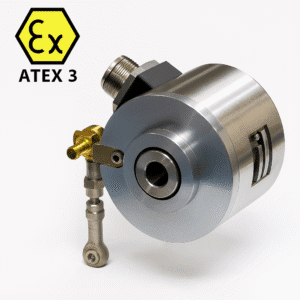



















TPS30
- Manufacturer: DPF Sensors
- Category: Pressure, SENSORS, Level Sensors
Submersible pressure level sensor.
Ranges up to 150 meters of water column
With atmospheric pressure compensation cable
Output signal in 4-20 mA / 0-10 Vdc / RS485
Properties
The hydrostatic level sensors They are devices widely used to measure liquid levels in industrial, agricultural, and environmental applications. Their operation is based on the principle of hydrostatic pressure, making them accurate, reliable, and versatile for different environments and types of liquids.
How do hydrostatic level sensors work?
The operating principle of a hydrostatic level sensor is based on the fact that the pressure at the bottom of a liquid increases proportionally with the liquid's height. This pressure is measured by a transducer, which converts the force exerted by the liquid into an electrical signal.
The basic formula used to calculate the level is:
P=ρgh
Where:
- P is the hydrostatic pressure.
- ρ is the density of the liquid.
- g is the acceleration of gravity.
- h is the height or level of the liquid.
Key features of hydrostatic level sensors
- High precision: They can measure accurately even under adverse conditions.
- Chemical compatibility: They are designed to work with corrosive liquids, drinking water, wastewater, oils and more.
- Versatile installation: They work in both open and closed tanks, lagoons, wells and rivers.
- Durability: They are made of resistant materials, such as stainless steel or special polymers.
Advantages of using hydrostatic level sensors
- Low maintenance: They have no moving parts that wear out over time.
- Stable performance: They operate efficiently in different temperatures and depths.
- Cost-benefit ratio: They offer accurate measurements at a competitive price.
Applications of hydrostatic level sensors
- Food industry: To measure levels in storage tanks for liquids such as milk, oil and juices.
- Water treatment: Level control in wastewater treatment plants.
- Hydrocarbons: Monitoring levels in fuel and oil tanks.
- Agriculture: Level control in irrigation systems and reservoirs.
- Environment: Monitoring levels in water bodies such as rivers, lakes and reservoirs.
Conclusion
Hydrostatic level sensors are an efficient solution for measuring liquid levels in a wide range of applications. Thanks to their high accuracy, low maintenance, and durability, they are an ideal choice for industries and projects requiring reliable and safe measurements.
If you're looking for customized solutions for liquid level monitoring, hydrostatic sensors may be the technology you need.

Other products